Article Not Found

The article could not be found.

Try searching or paste a Nostr address (naddr)

If you have the article's Nostr address (naddr), paste it in the search box below. We'll attempt to fetch it from the relays and add it to our index.

Looking for people? Search users

Cover image for Scott Bessent DESTROYS Gavin Newsom after Davos Trump smear

Scott Bessent DESTROYS Gavin Newsom after Davos Trump smear

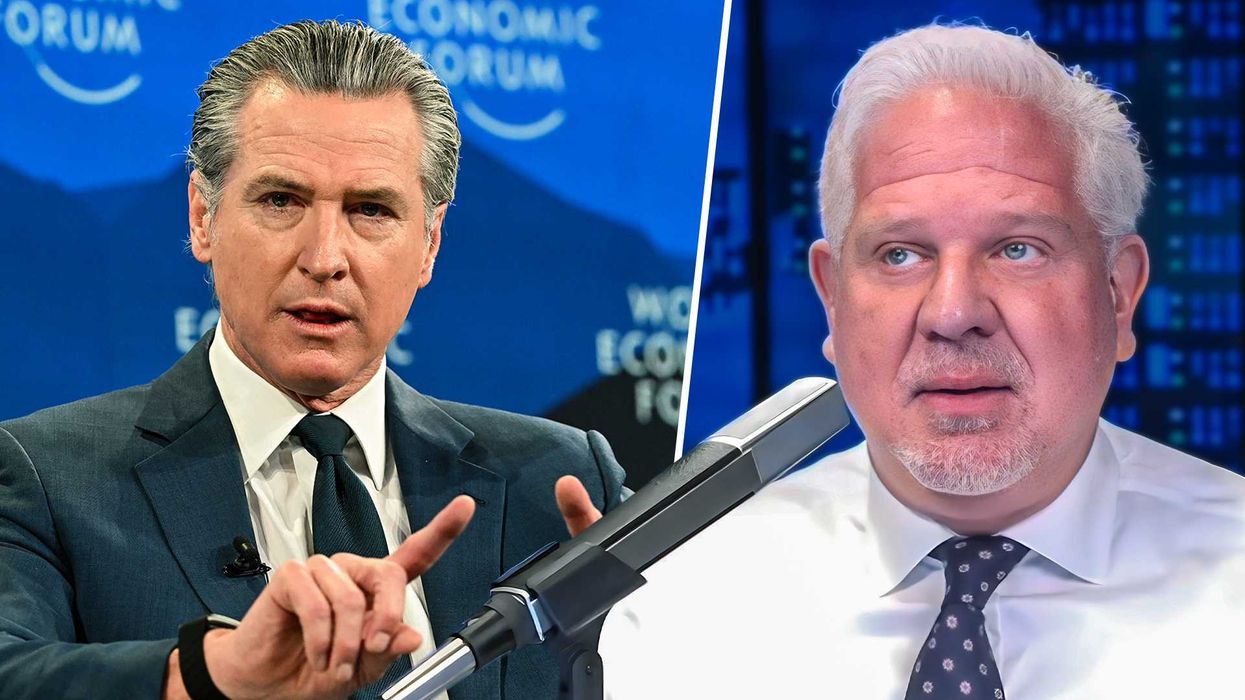
California Governor Gavin Newsom (D) flaunted his disdain for the Trump administration at Davos this past week — but thanks to Secretary of the Treasury Scott Bessent, he didn’t get away with it.“We used to have a general rule. You do not go out of the country and badmouth your country or your politicians. You just don’t do it. And we never used to do that. That changed under the Obama administration," Blaze Media co-founder Glenn Beck explains.And that’s exactly what Newsom did."Trump is a T. rex. You mate with him or he devours you, one or the other," Newsom said at Davos on Tuesday.And consequentially, even Scott Bessent felt the need to take Newsom down.“I think it’s very, very ironic that, you know, Governor Newsom, who strikes me as Patrick Bateman meets Sparkle Beach Ken, may be the only Californian who knows less about economics than Kamala Harris,” Bessent said.“He’s here this week with his billionaire sugar daddy, Alex Soros, and Davos is a perfect place for a man who, when everyone else is on lockdown, when he was having people arrested for going to church, he was having thousand-dollar-a-night meals at the French Laundry. And I’m sure the California people won’t forget that.”Bessent went on to say that he had a “message to Governor Newsom,” and that message is that the Trump administration is “going to crack down on waste, fraud, and abuse” in his state.“I was told he was asked to give a speech on his signature policies, but he’s not speaking, because what have his economic policies brought? Outward migration from California, a gigantic budget deficit, the largest homeless population in America, and the poor folks in the Palisades who had their homes burned down,” he continued.“He is here hobnobbing with the global elite while his California citizens are still homeless. Shame on him. He is too smug, too self-absorbed, and too economically illiterate to know anything,” he added.Glenn is thrilled by Bessent’s speech.“I just don’t know who my biggest hero is right now, but Bessent is one of them,” Glenn says.“He’s one of the best, well-put-together, deep-thinking, calm secretaries that we’ve ever had in that position,” he continues. “I mean, I just have complete confidence that if he says it, I’m like, ‘Okay, I may not understand or I may not agree with it, but I’m going to roll the dice with you.’”Want more from Glenn Beck?To enjoy more of Glenn’s masterful storytelling, thought-provoking analysis, and uncanny ability to make sense of the chaos, subscribe to BlazeTV — the largest multi-platform network of voices who love America, defend the Constitution, and live the American dream.

Cover image for U.S. Treasury: Congress Needs to Pass Crypto Legislation This Spring

U.S. Treasury: Congress Needs to Pass Crypto Legislation This Spring

Bitcoin Magazine U.S. Treasury: Congress Needs to Pass Crypto Legislation This Spring U.S. Treasury Secretary Scott Bessent said Friday that Congress must move quickly to pass crypto legislation establishing clear federal rules for digital assets, urging lawmakers to deliver the bill to President Donald Trump’s desk for signature this spring. Speaking on CNBC, Bessent was asked about the status of the proposed “Clarity Act” amid a recent sell-off across the crypto market. He said the bill would provide “great comfort to the market” during a period of heightened volatility, signaling the administration’s push to create a more defined regulatory framework for the sector. Bessent added that some crypto firms have attempted to block the legislation, but noted there remains a bipartisan coalition of lawmakers committed to advancing the bill. However, he warned that the coalition’s momentum could weaken if Democrats regain control of the House of Representatives in November. Last week, Bessent urged Congress to pass the legislation, warning that the U.S. needs clear crypto market structure rules before the spring legislative window closes. Bessent told Fox News that “what we’re seeing in the crypto market over the past few months means more than ever that the U.S. needs market structure, we need clarity, and we need to get this across the line this spring,” he said. He said recent volatility in bitcoin and digital asset markets underscores the urgency of legal certainty. Bessent blamed the current stalemate on resistant factions within both the crypto industry and traditional finance, with disputes centering on stablecoin yield restrictions and regulatory oversight. Potential crypto tax breaks At a Senate Banking, Housing and Urban Affairs Committee hearing on the Financial Stability Oversight Council’s annual report, Bessent was pressed by members of Congress on whether China is using blockchain and digital assets to challenge American financial leadership, with Bessent saying Treasury has not observed rumored gold-backed Chinese instruments but noting China’s activity through Hong Kong. The discussion shifted quickly to U.S. regulation, where Bessent voiced strong support for the proposed Clarity Act, arguing that digital asset innovation should be embedded within the U.S. economy under “safe, sound, and smart” oversight. He also warned that deposit volatility from crypto-related legislation could harm community and small banks by limiting their ability to lend locally. Senator Cynthia Lummis raised the possibility of a de minimis Bitcoin tax exemption for small transactions and asked for clearer guidance on calculating capital gains across mixed-cost portfolios, with Bessent offering to have Treasury’s tax policy office engage with her team. The hearing followed Bessent’s earlier testimony that the government cannot bail out bitcoin or direct banks to hold crypto, and that seized BTC will now be retained in the Strategic Bitcoin Reserve rather than sold. This post U.S. Treasury: Congress Needs to Pass Crypto Legislation This Spring first appeared on Bitcoin Magazine and is written by Micah Zimmerman.

Cover image for Senator Lummis to Work With Treasury on Bitcoin Tax Guidance, Hints At Potential Exemption

Senator Lummis to Work With Treasury on Bitcoin Tax Guidance, Hints At Potential Exemption

Bitcoin Magazine Senator Lummis to Work With Treasury on Bitcoin Tax Guidance, Hints At Potential Exemption Senator Cynthia Lummis (R-Wyo.) signaled that she would be open to meet with Treasury Secretary Scott Bessent’s office to explore potential clarity on Bitcoin taxation, including a de minimis exemption for small transactions and guidance on calculating capital gains. Lummis was one of the lawmakers who pressed Bessent today on digital assets and clear U.S. regulation. Bessent was speaking to the Senate Banking, Housing and Urban Affairs Committee about the Financial Stability Oversight Council’s annual report — essentially a high‑profile Senate hearing on U.S. financial stability where he is being questioned on economic policy and oversight issues. The hearings have been semi-heated at times, with Senator Mark Warner chiming in, saying that “I feel like I’m in crypto hell.” Senator Lummis’ crypto-focused questioning Lummis began her time in the session by asking whether China is leveraging digital assets and blockchain to challenge American financial leadership. Bessent said it is unclear, noting that while there are rumors of Chinese digital assets potentially backed by gold or other mechanisms, the U.S. Treasury has not observed such instruments. He acknowledged China’s active exploration of digital asset frameworks, particularly through Hong Kong’s financial sandbox and the Hong Kong Monetary Authority. The conversation quickly turned to U.S. regulation. Lummis emphasized the need for clear rules of the road, particularly legislation governing stablecoins and market structure. “It’s impossible to proceed without it,” Bessent said. He expressed support for the proposed Clarity Act, which seeks to provide regulatory clarity for digital assets, urging industry participants who oppose regulation to consider relocating to countries with looser oversight. “We have to get this Clarity Act across the finish line,” Bessent said. “Any market participants who don’t support it should move to El Salvador.” Both officials highlighted the benefits of embedding the digital asset industry within the U.S. economy. Bessent stressed that the goal is a balance between fostering innovation and maintaining “safe, sound, and smart practices” under U.S. government oversight. He noted ongoing efforts to engage community and small banks in the digital asset ecosystem, acknowledging concerns that new legislation could trigger deposit outflows. “Deposit volatility is very undesirable because it is the stability of those deposits that allows them to lend into their communities,” Bessent said. Will there be a Bitcoin tax exemption? Lummis also raised questions about digital asset taxation, particularly the treatment of small transactions — known as de minimis — and the calculation of capital gains for users with mixed portfolios of Bitcoin purchased at different prices over time. Bessent acknowledged the complexity of the issue and offered to have the Treasury’s Office of Tax Policy work with Lummis’ team to provide guidance. Nothing definitive was said on a bitcoin tax exemption, but the idea was floated between the two lawmakers. Yesterday, Treasury Secretary Scott Bessent told lawmakers that the U.S. government has no authority to bail out bitcoin or direct banks to hold crypto. During testimony before the House Financial Services Committee, Bessent emphasized that taxpayer funds cannot be deployed into BTC and that the government’s only exposure comes from law enforcement seizures. He noted that retained bitcoin has appreciated significantly, citing $500 million in seized BTC growing to over $15 billion, but stressed this does not involve active investment. Bessent also confirmed that the U.S. will stop selling seized bitcoin, adding it to the Strategic Bitcoin Reserve in line with Executive Order 14233. This post Senator Lummis to Work With Treasury on Bitcoin Tax Guidance, Hints At Potential Exemption first appeared on Bitcoin Magazine and is written by Micah Zimmerman.

Cover image for White House slams 'rude and low IQ' Maxine Waters after Scott Bessent crushes her during congressional hearing

White House slams 'rude and low IQ' Maxine Waters after Scott Bessent crushes her during congressional hearing

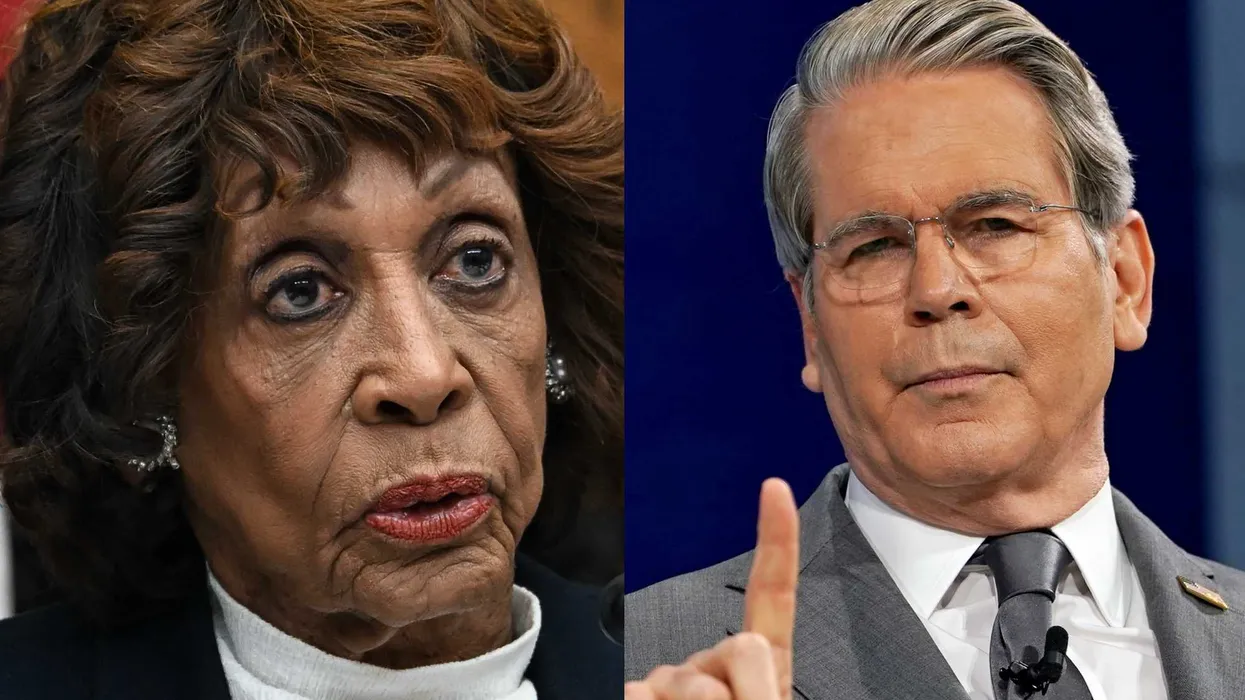
Democratic Rep. Maxine Waters of California and Treasury Secretary Scott Bessent got into a rhetorical tussle during a congressional hearing Wednesday, and the White House weighed in on the incident.Waters and Bessent were debating whether illegal immigration had a deleterious effect on the housing crisis when the Democrat called on the chairman of the House Financial Services Committee to "shut him up" after her time expired.'Mr. Chair, will you let him know that when I ask you for time ... can you shut him up?' Waters challenged Bessent on his previous comments linking tariffs to inflation, and he countered by citing studies that said tariffs were not inflationary. She went on to the housing crisis and blamed tariffs on lumber and steel for some of the housing price increases.Bessent tried to argue with her, but she interrupted him and continued."Trump single-handedly made housing more expensive, and once again, you know it. As Axios has reported, you were planning to lift tariffs on housing production goods," she said.She went on to criticize Trump's policies on immigration and argued that deportations had hurt the housing construction industry by deporting their source of labor."I ask you, Secretary Bessent, will you be the voice of reason in the administration and urge Trump to stop waging a war on American consumers and on housing affordability?" she asked.When Bessent launched into an explanation, she interrupted numerous times."Will you be the voice?" she shouted. "Will you be the voice?"He tried to talk over her, but she persisted in interrupting."Reclaiming my time!" she interrupted. "Mr. Chair, will you let him know that when I ask you for time ... can you shut him up?""Can you maintain some level of dignity?" Bessent fired back."Gentlelady's time has expired," the chairman said."No, my time has not expired!" she protested.Waters accused the chairman of protecting Bessent before they moved on.RELATED: Jasmine Crockett stumbles when confronted with her past comments insulting Latino voters The White House Rapid Response account fired back at Waters on social media, calling her "rude and low IQ" and quoting from Bessent's testimony."Adding 10 to 20 million new people demanding housing, Congresswoman, is what caused a great deal of housing inflation for working Americans — so you and the Biden administration should be ashamed," he said.Like Blaze News? Bypass the censors, sign up for our newsletters, and get stories like this direct to your inbox. Sign up here!

Cover image for U.S. Treasury: US Government Cannot Deploy Taxpayer Funds to ‘Bail Out’ Bitcoin

U.S. Treasury: US Government Cannot Deploy Taxpayer Funds to ‘Bail Out’ Bitcoin

Bitcoin Magazine U.S. Treasury: US Government Cannot Deploy Taxpayer Funds to ‘Bail Out’ Bitcoin As Treasury Secretary Scott Bessent testified before the House Financial Services Committee Wednesday morning, Rep. Brad Sherman pressed Bessent over whether the U.S. government could ever step in to “bail out” bitcoin. Bessent was presenting over the Financial Stability Oversight Council’s annual report on emerging economic risks and much of the comments and questions from the Council reference the Trump administration growing scrutiny over its economic agenda. During a tense exchange, Sherman referenced the 2008 financial crisis and argued that bailouts have historically protected powerful institutions when markets collapse. He asked whether Treasury or federal financial regulators could take similar action for bitcoin, including directing banks to buy BTC or changing banking rules to encourage crypto holdings. Bessent rejected the premise outright. “I am Secretary of the Treasury. I do not have the authority to do that,” he said, adding that neither the Treasury nor his role as chair of the Economic Stability Oversight Council provides power to order banks to invest in BTC or to allocate public funds into crypto assets. JUST IN: Treasury Secretary Scott Bessent defends the US having a Strategic Bitcoin Reserve: "That is an asset of the US government. The asset seizure, that $1 billion of bitcoin was seized, $500 million was retained. And that $500 million has become over $15 billion." pic.twitter.com/cHegIcv0pb — Bitcoin Magazine (@BitcoinMagazine) February 4, 2026 Sherman attempted to clarify whether taxpayer money under Treasury management could ever be deployed into BTC, but Bessent emphasized that the government’s current BTC exposure comes only through law enforcement seizures, not investment decisions. “We are retaining seized bitcoin,” Bessent said. “That is an asset of the U.S.,” he later said. Bessent then elaborated on that point, noting that retained bitcoin from past seizures has appreciated significantly over time. He cited an example in which roughly $500 million in retained BTC later grew into more than $15 billion in value, underscoring bitcoin’s potential upside even as policymakers remain skeptical of direct government involvement. The exchange ended when the chair cut Sherman off after his allotted time expired. Bessent: U.S. will stop selling bitcoin Earlier this year, Bessent said the U.S. government’s stance is to stop selling seized BTC and instead add it to the Strategic Bitcoin Reserve. Speaking at the World Economic Forum in Davos, he framed the move as part of a broader push to bring digital-asset innovation back to the U.S. The comments came amid questions over BTC seizures tied to cases involving Tornado Cash and Samourai Wallet developers. While declining to discuss active litigation, Bessent stressed that seized BTC will be retained by the federal government once legal damages are resolved. Any selling of BTC would contradict Executive Order 14233, which requires forfeited bitcoin to be held in the U.S. Strategic Bitcoin Reserve rather than liquidated. This post U.S. Treasury: US Government Cannot Deploy Taxpayer Funds to ‘Bail Out’ Bitcoin first appeared on Bitcoin Magazine and is written by Micah Zimmerman.

Return to Homepage